
For most of its history, Bitcoin’s price was driven by a sprawling cast of buyers: idealists, speculators, early adopters, and, more recently, institutional investors looking for a new portfolio hedge. Demand was fragmented and hard to predict. In 2026, it is neither.
Bitcoin is trading just over $77,500, down almost 30% from a year ago. What appears to be largely preventing a steeper fall — and what has been doing so for much of this year — is a single company operating on a scale that has no precedent in the asset’s history. Strategy Inc., the company run by Michael Saylor, has acquired 171,238 Bitcoin year-to-date, according to its public filings. That exceeds the roughly 62,000 Bitcoin produced by the entire global mining network over the same period — and appears to represent the majority of net corporate and ETF-related accumulation in 2026, according to Mark Palmer, an analyst at Benchmark-StoneX, who covers the company.
“If you have been trading Bitcoin around macro catalysts, Fed speakers, or ETF headlines,” wrote 10x Research, which recently released a report estimating Strategy has accounted for around 70% of buying across a universe that includes stablecoins, ETFs and futures, “you have been watching the wrong clock.”
The clock runs like this: Strategy funds its Bitcoin purchases through a perpetual preferred stock called STRC, which pays investors an 11.5% annual cash dividend. In the weeks before each month’s record date — set around the 15th — investors accumulate the shares, driving the price back up toward its $100 face value. That recovery allows Strategy to sell new shares into the market and direct the proceeds straight into spot Bitcoin. When the cutoff passes and the shares drift lower, the buying slows. It picks up again the following month. STRC traded at around $99.28 on Wednesday.
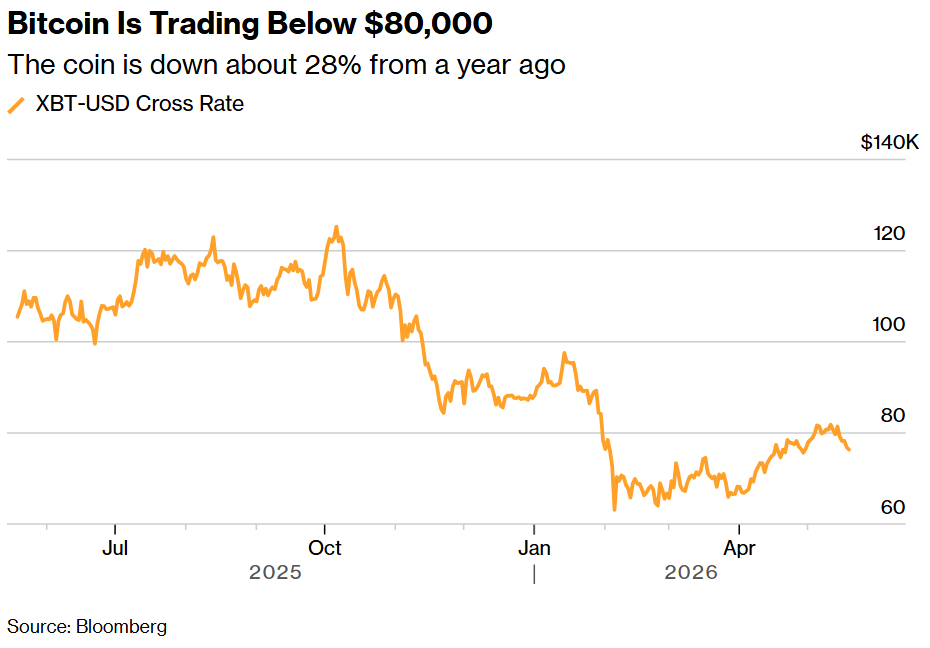
In the last three weeks alone, Strategy represented about 12% of all trading activity in Bitcoin, according to Lance Vitanza, managing director of equity research at TD Cowen. Some weeks, the company is a bigger presence than others, sometimes accounting for more than 20% of total volume, according to his recent report. Strategy didn’t respond to a request for comment.
“Although traditional Bitcoin demand indicators, including spot BTC ETF inflows, Bitcoin futures open interest and even stablecoin inflows have yet to meaningfully accelerate into 2026, Strategy continues to accumulate Bitcoin at roughly the same pace as a year ago, when it purchases nearly $12 billion,” said Markus Thielen, chief executive officer of 10x Research. “This suggests that the current wave of demand is being driven less by organic market participation and more by financial engineering, as Strategy increasingly relies on yield-generating capital market products to fund its Bitcoin acquisition strategy.”
The picture could change. Regulatory clarity, fresh ETF demand and Bitcoin’s dwindling supply may yet draw new buyers in. For now, those remain arguments about the future. The present increasingly belongs to Saylor.
What makes the concentration striking is not Saylor’s conviction, which has never been in doubt, but the quiet collapse of everything around him. The flows into US Bitcoin exchange-traded funds that defined the 2024 bull run have dried up of late. Hedge funds poured into ETFs as an arbitrage trade — that premium has now vanished. The arbitrage is gone, and so are the funds.
Retail has also largely disappeared. Daily trading volumes in South Korea — a reliable barometer of speculative appetite in Asia and beyond — have fallen. The explanation is not complicated: the South Korean stock market has returned more than 150% over the past 12 months, driven by semiconductor companies. Against that backdrop, Bitcoin’s decline looks like the wrong trade, and ordinary investors have acted accordingly.
Miners, once a natural source of accumulation, have pivoted. Having learned the hard way from ill-timed moves into Bitcoin-treasury strategies last cycle, most are now selling every coin they produce to fund shifts into AI hosting infrastructure. The natural long-term holding they once provided has been replaced by a steady stream of supply.
All that raises a big question: What happens to a $1.5 trillion asset when the one mechanism sustaining it falters? Strategy’s average purchase price across its roughly 843,700 Bitcoin holdings sits at roughly $75,700, slightly below where Bitcoin trades today. That thin cushion matters. Any fall in the token wouldn’t just hurt Strategy’s balance sheet — it would erode confidence in STRC, which closes the At-The-Market share selling program, which removes the bid, which puts further pressure on Bitcoin. The loop that has driven prices higher runs just as efficiently in reverse.
Also giving investors pause: The growing sense that Strategy may at some point sell Bitcoin. After years of championing a maximalist philosophy around Bitcoin, executives at the firm said earlier this month they would consider selling the token if doing so improved the company’s capital structure or increased “Bitcoin per share,” a metric used to market the stock to investors. Saylor likened Strategy to a real-estate developer, and outlined a scenario in which it might sell Bitcoin in the future.
“Strategy has made it clear that marginal sales of Bitcoins aren’t off the table for dividend coverage or tax purposes, but any disposals would be dwarfed by ongoing accumulation,” Palmer said. “The upshot is that the company’s net Bitcoin per share is poised to keep going up.”
For now, Strategy is holding. But the market that once had dozens of demand sources — retail waves, ETF arbitrage, corporate treasury diversification, ideological conviction — has been distilled, according to skeptics, down to a single buying machine, dependent on one man’s continued ability to raise capital against an asset he is simultaneously the largest buyer of.
Written by: Olga Kharif @Bloomberg
The post “Bitcoin Grows More Dependent on Saylor’s Buying Machine” first appeared on Bloomberg