War in the Middle East has given US companies a headache that extends well beyond dealing with higher energy costs, the Federal Reserve said.
“The conflict in the Middle East was cited as a major source of uncertainty that complicated decision-making around hiring, pricing and capital investment, with many firms adopting a wait-and-see posture,” the central bank reported in its Beige Book survey of regional business contacts released Wednesday.
Despite that higher uncertainty, economic activity continued to increase at a slight-to-modest pace across most US regions, the Fed said.
Price growth remained moderate overall, but energy and fuel costs leapt in all 12 Fed districts. The report also noted that price pressures were bleeding beyond energy.
“Energy and fuel costs rose sharply in all districts, attributed to the Middle East conflict, leading to higher freight and shipping costs and higher prices for plastics, fertilizers and other petroleum-based products,” the Fed said. “Input cost pressures beyond energy-related increases were also widespread.”
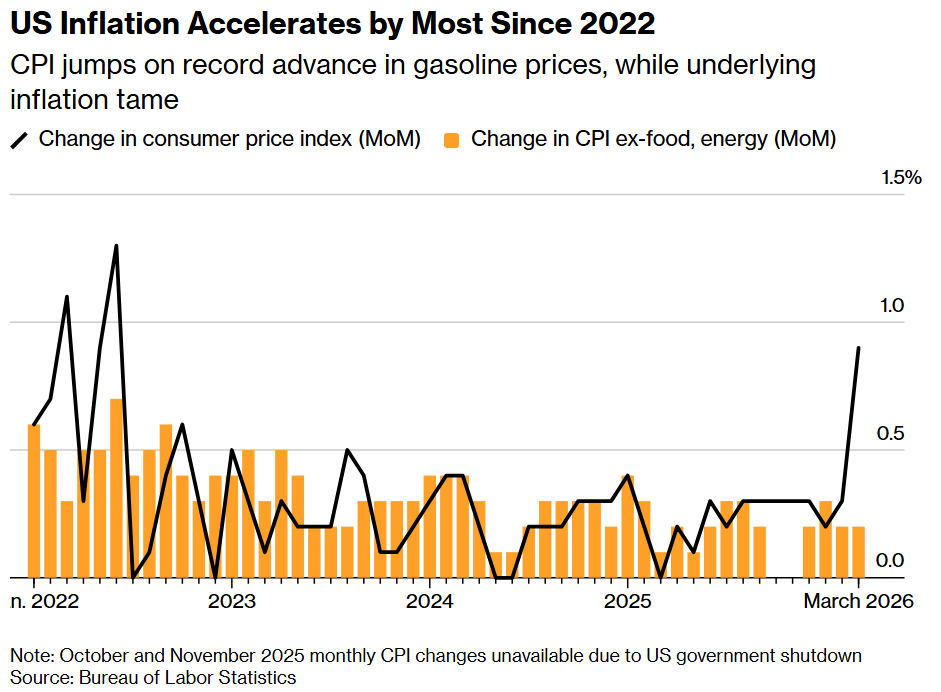
The oil shock spurred by the conflict has sent gasoline prices in the US to their highest level since 2022, leading US inflation to jump in March.
The report featured information compiled by the New York Fed and collected through April 6.
Several Fed policymakers have signaled a preference to keep borrowing costs steady for quite some time while they evaluate the economic data. Officials are expected to leave their benchmark rate unchanged when they meet on April 28-29, according to pricing in futures contracts.
A growing number of officials are concerned the war could fuel inflation, and more favored language at their March gathering that would have made it clear the Fed may need to raise interest rates.
On the employment side, the US labor market remained stable across most districts. The report added, however, that “several districts noted increased demand for temporary or contract workers, as firms remained cautious about committing to permanent hires.”
A separate government report released earlier this month showed US job growth rebounded in March and the unemployment rate fell, pointing to some stabilization in the labor market as the war with Iran began.
Some firms surveyed for the Beige Book said AI-driven productivity gains had made it possible to delay or reduce hiring. Most districts reported, however, that AI had not yet meaningfully affected overall staffing levels.
Boston: Health care industry and life sciences contacts reported an increase in layoffs attributed to a combination of reduced research funding, AI-driven productivity growth, and general cost adjustments.
New York: A New York City-based manufacturer noted difficulty hiring machinists was impeding their ability to ramp up production, while an upstate New York wood mill reported difficulty finding staff for more physically-demanding jobs.
Philadelphia: Some businesses noted that many cost increases from higher oil prices would be lagged because of previously negotiated short-term contracts and that they were bracing for higher material costs, especially for plastics, as those contracts come up for renegotiation.
Atlanta: A baby apparel manufacturer reported solid demand for both its low- and high-end clothing and accessories while sales for middle tier products were flat, suggesting a “barbell effect.” Automobile manufacturers reported softer demand for lower-priced vehicles, but sales of luxury models were strong.
Cleveland: Grocery store and automotive contacts noted that higher fuel prices strained customers’ wallets, and one higher-end grocer reported customers making fewer trips and purchases.
Richmond: Loan pipeline growth rose modestly, mainly coming from banks’ commercial portfolios. A banker observed that this pipeline increase was coming from customers moving forward on capital projects more based on need versus pursuing an expansion or upgrading equipment.
Chicago: A contact at a temporary employment agency said demand was up as companies hesitated to hire long-term employees amidst elevated uncertainty. A manufacturer said they had instituted a hiring freeze in anticipation of higher input costs related to the conflict in the Middle East.
St. Louis: A manufacturer noted that higher prices from chemical and freight suppliers forced them to pass these higher costs on to customers. Similarly, a transportation company indicated that recent contract renewals reflected an average increase of about 5%, primarily driven by elevated fuel prices and depreciation rates.
Minneapolis: A construction industry contact reported that raw material price increases in April were “much larger than normal” and vendors warned that prices would continue to increase.
Kansas City: One contact succinctly stated that low- and moderate-income households “can’t out-budget low wages, tariffs and inflation.” Relatedly, delinquencies and defaults on credit cards and mortgages had also notably increased.
Dallas: Some independent producers reported an intent to drill more wells later this year in response to higher prices, and oilfield services contacts noted some increase in price quoting. However, producers broadly expect WTI prices to decline meaningfully from recent highs by year-end 2026 and fall further in 2027, viewing the Middle East conflict as likely too transient to warrant any significant production increases.
San Francisco: Transportation, fertilizer and chemical costs increased, and growers expressed concerns about fertilizer prices and availability stemming from the ongoing Middle East conflict. Some contacts noted that input costs exceeded the prices producers received for their crops, adding financial pressures to agricultural borrowers.
Written by: Jonnelle Marte @Bloomberg
The post “War’s Impact on Firms Goes Beyond Energy Costs: Fed’s Beige Book” first appeared on Bloomberg