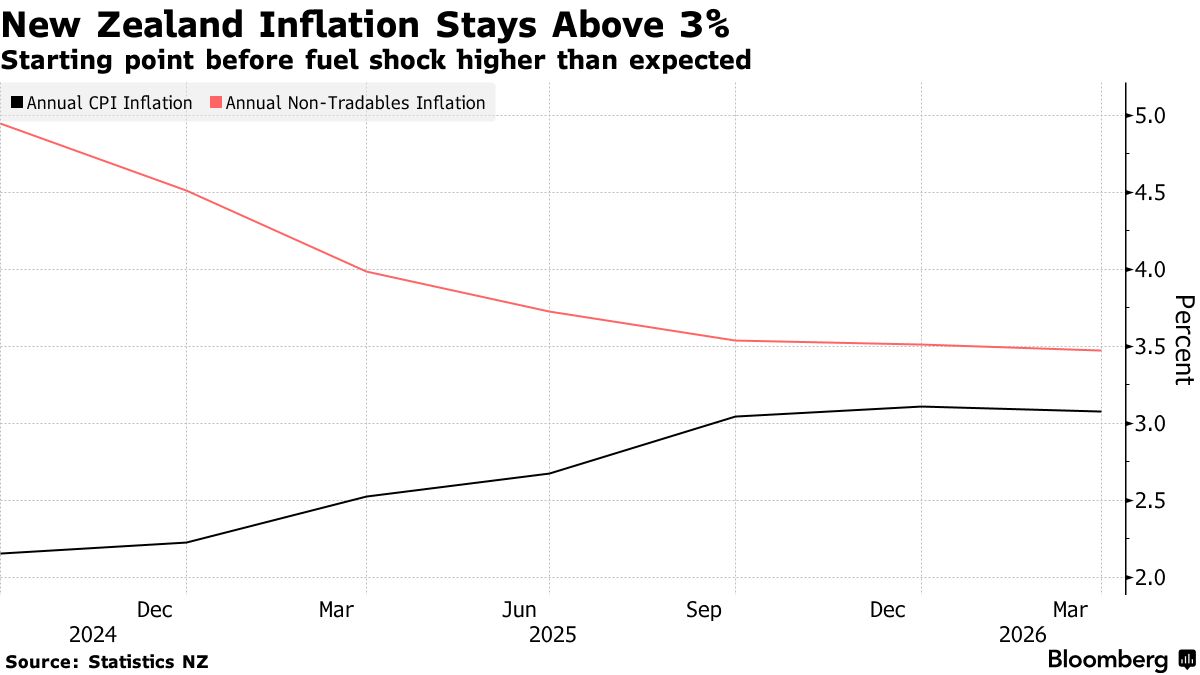
New Zealand inflation unexpectedly held above the top of the Reserve Bank’s 1%-3% target last quarter, prompting markets to boost bets on a July interest-rate hike as the impact of an Iran-war driven surge in fuel prices is still to come.
The currency and bond yields gained after the Consumers Price Index climbed 3.1% from a year earlier, matching the pace in the fourth quarter and above a forecast 2.9%, official data showed Tuesday. Prices advanced 0.9% from the preceding three months, also exceeding estimates.
The RBNZ provisionally estimates inflation will accelerate to 4.2% in the current quarter, while local economists reckon the CPI could push even higher and project it will stay above the top of the target for some time. Faced with the risk of stronger inflation becoming embedded in the economy, the central bank is tipped to raise rates sooner than it had previously signaled.
Higher prices and rising borrowing costs will be deeply unwelcome for the center-right government as it prepares to campaign for November’s election on the basis of superior economic management. Prime Minister Christopher Luxon is already trailing in opinion polls and being forced to fend off speculation about a leadership challenge if he can’t turn around voter perceptions.
The New Zealand dollar rose as much as 0.4% while the yield on two-year government notes jumped as traders boosted bets on an RBNZ rate rise. Markets are now fully pricing a hike in July, up from a three-in-four chance prior to the inflation print.
RBNZ Governor Anna Breman has said policymakers are concerned that medium-term inflation pressures could be increasing and are prepared to act decisively with rate hikes if that occurs. Most local economists expect the Official Cash Rate will start to increase in September, although a minority tip a July hike.
“A return to the 1-3% inflation target looks to be off the cards until mid-2027, with the risks of a more pronounced overshoot,” said Mark Smith, senior economist at ASB Bank in Auckland. “Today’s figures highlight the risk of the RBNZ lifting the OCR sooner than our September start date.”
Policymakers are mindful that higher prices from the Middle East conflict will also damp household spending on non-essential items and curb hiring, which will slow economic growth.
Oil and natural gas prices soared Monday after the US Navy seized an Iranian ship during a chaotic weekend that saw Tehran firing at vessels and reimposing controls in the Strait of Hormuz.
The US-Iran conflict has triggered an unprecedented supply shock, intensifying inflationary pressures and weighing on worldwide economic growth. The cumulative global impact of the war will begin to emerge this week, with business surveys from multiple countries potentially flagging risks of stagflation.
In New Zealand, a report earlier Tuesday showed first-quarter business confidence slumped to its lowest level since mid-2024, with firms indicating they expect to reduce investment and fire workers as rising costs hit profits.
The CPI report also showed:
“Today’s stronger starting point for headline inflation and zero progress on non-tradable inflation won’t be welcome, particularly in an environment when inflation expectations are threatening to drift meaningfully higher,” said Miles Workman, senior economist at ANZ Bank in Wellington. “The focus remains on inflation persistence, and today’s data offered little new insight on that front.”
Written by: Tracy Withers @Bloomberg
The post “New Zealand Inflation Exceeds Forecasts, Spurring Rate-Hike Bets” first appeared on Bloomberg