In its early years, bitcoin was considered a diversifier in a portfolio, often compared to digital gold and even thought of as an inflation hedge. Even so, bitcoin did not have any meaningful ties with equities. In 2020, a significant shift occurred. The relationship between bitcoin and equities turned positive and has remained so over the past five years. What has changed?
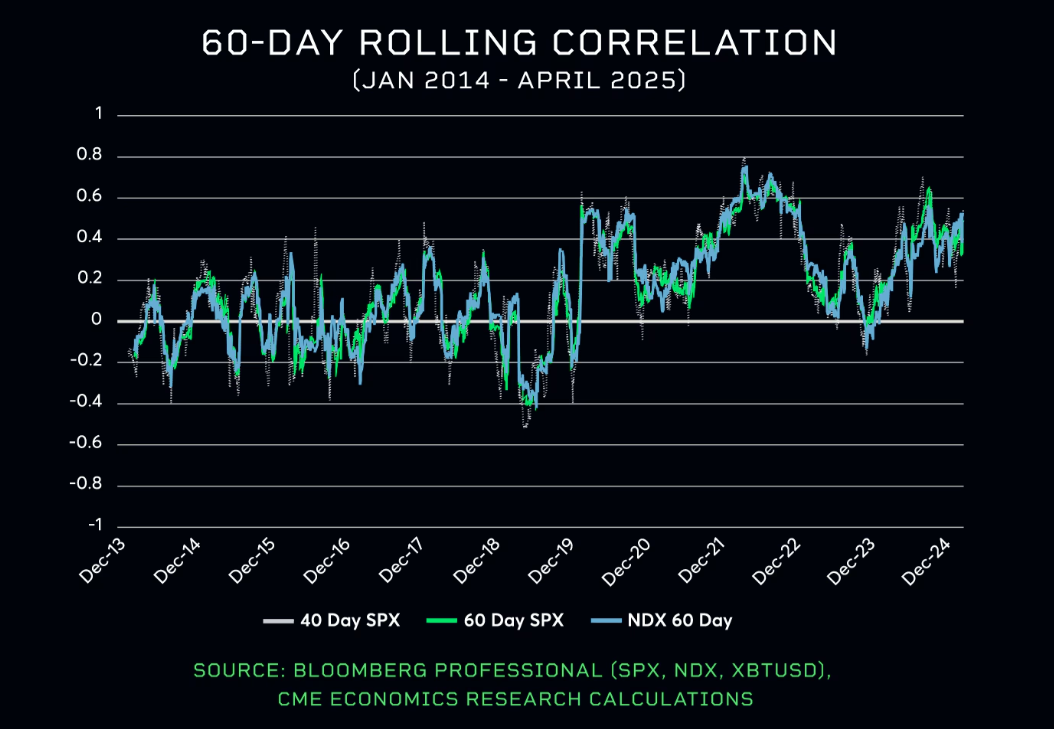
Daily returns data from January 2014 to April 2025 reveal a correlation of 0.2 between bitcoin and major equity indices. However, when examined in smaller time frames, the relationship becomes more pronounced. In 2020, the correlation between bitcoin and the S&P 500 and Nasdaq-100 indices shifted from being non-correlated to a positive relationship, with rolling correlations jumping to about 0.5.
The positive correlation is not limited to a single index. Both the S&P 500 and Nasdaq-100 show very similar patterns, indicating that the trend is widespread across the equities market. This suggests that bitcoin’s performance is now more closely tied to the broader economic and market conditions.
Higher positive correlations are frequently observed during periods of market stress. For example, from February to March 2020 – during the initial stages of the COVID-19 pandemic – and again in 2022, from July to October 2023 and from January to early April 2025. These periods of market uncertainty have seen bitcoin and equities move in the same direction, reflecting a risk-off sentiment that is common to both asset classes.
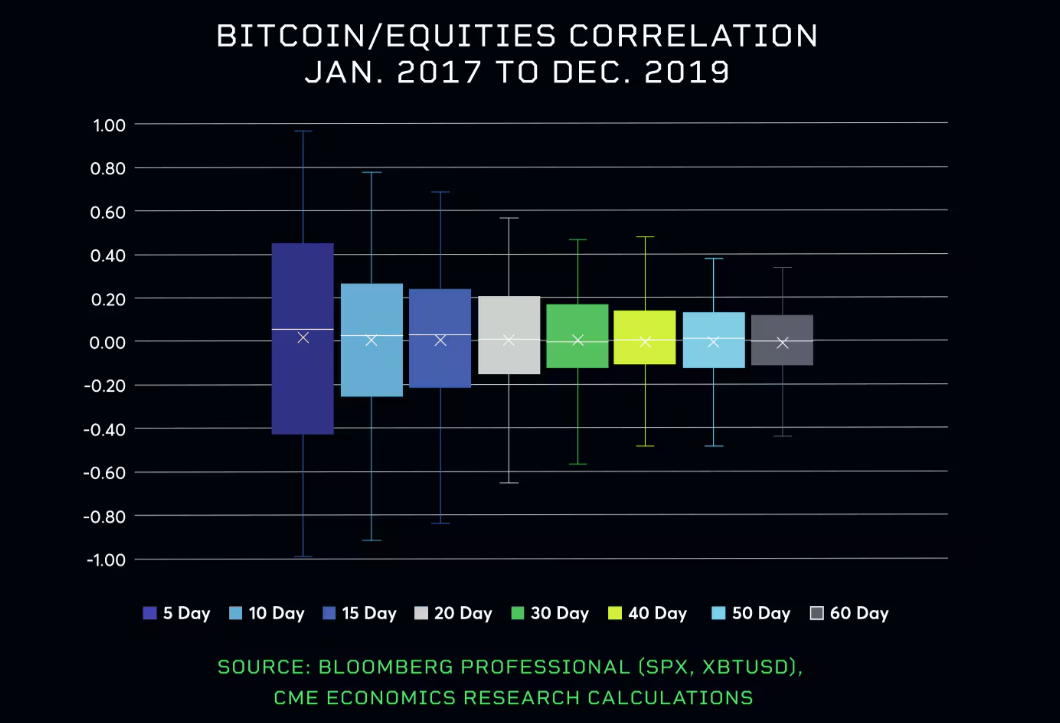
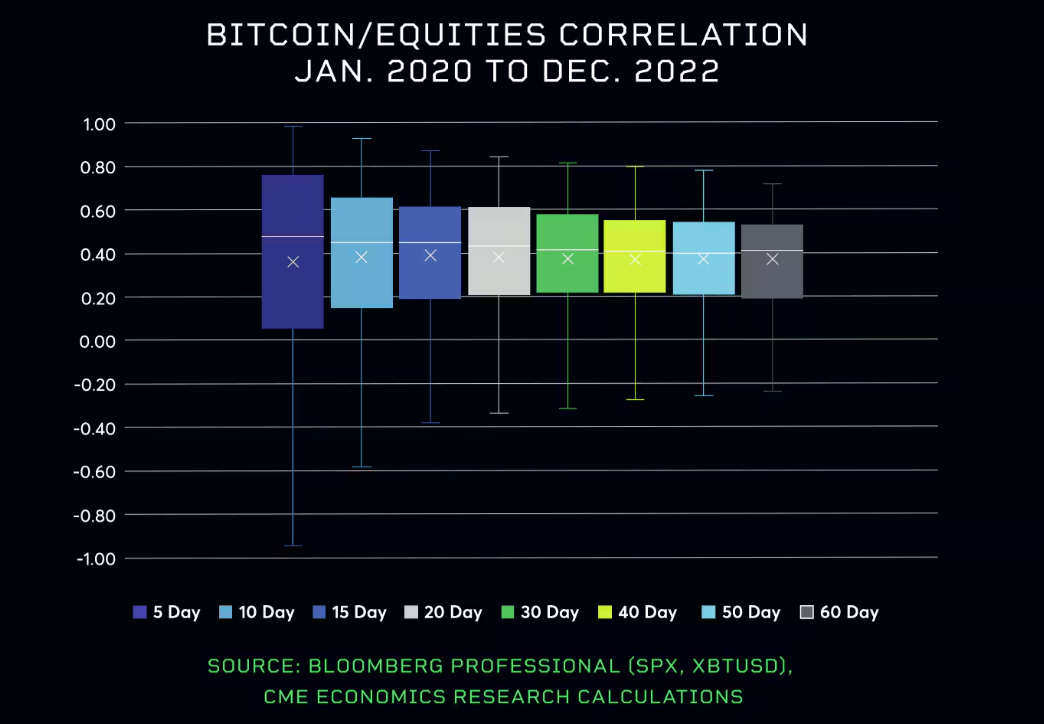
Box and Whisker plots from 2017 to 2019 show medians near zero, indicating a lack of correlation between bitcoin and equities. However, from 2020 to 2022, the medians range just above 0.4, highlighting the significant shift in the relationship.
There are five seemingly common factors between equities and bitcoin that may be contributing to this positive correlation.
Written by: Dr. Mark Shore @OpenMarkets
The post “Why Bitcoin’s Relationship with Equities Has Changed” first appeared on OpenMarkets