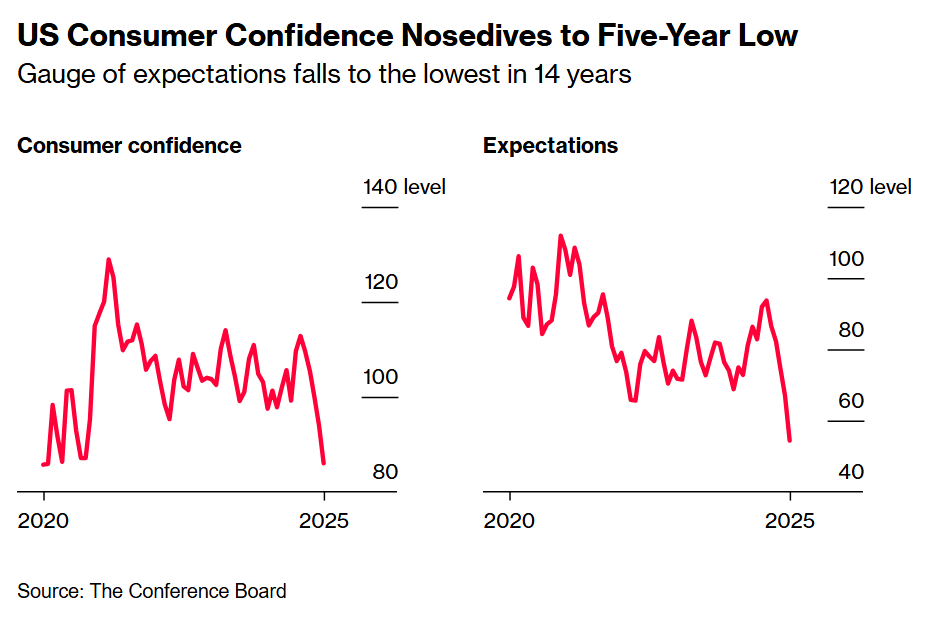
Corporations meanwhile are battening down the hatches in preparation for rough seas. General Motors and JetBlue this week joined a growing list of companies pulling earnings projections as they grapple with Trump’s new taxes on their imports. (Trump beat a fresh retreat on Tuesday, this time in favor of automakers.)
UPS, which also backed away from its 2025 financial guidance due to what it diplomatically called “macroeconomic uncertainty,” is planning to be less circumspect with its employees: It plans to fire 20,000 of them—or about 4% of its workforce—while shuttering dozens of facilities. It’s a move reflected more broadly in the American labor market, given that new data shows job openings fell last month to the lowest since September.
Nevertheless, the bounce in equities continued Tuesday as investors appeared to set aside the sobering data in favor of bets on Federal Reserve rate cuts and corporate resilience. Here’s your markets wrap.
Trump has been sued over a vast array of potentially unconstitutional and illegal orders in the past 100 days (he went after public broadcasting on Tuesday), but now the entire central pillar of his attempt to take power from Congress is being challenged as a whole. A lawsuit filed late Monday by a coalition of labor unions, nonprofits and local governments is the broadest legal challenge yet of Trump’s attempt to gut the federal government, NPR reported. In it, plaintiffs allege that Trump is effectively ordering the evisceration of the federal workforce in violation of the Constitution’s separation of powers.
Some of the unions and nonprofits previously sued the Trump administration for firing probationary workers en masse, though the Supreme Court blocked a judge’s order to reinstate thousands of employees as the litigation proceeds. Monday’s lawsuit goes much further, arguing that Trump’s Feb. 11 executive order empowering Elon Musk’s “Department of Government Efficiency” is usurping the clear mandate of lawmakers in its rush to slash workers, agencies and regulatory structures. Federal agencies are created by Congress, and only Congress can authorize the radical changes Trump is attempting, according to the lawsuit.
Harvard University released long-awaited reports on anti-Muslim bias and antisemitism, presenting a scathing critique of how its students treated each other in the aftermath of the Hamas attack against Israel on Oct. 7, 2023, and Israel’s subsequent destruction of much of the Gaza Strip. “I’m sorry for the moments when we failed to meet the high expectations we rightfully set for our community,” Harvard President Alan Garber wrote in a letter accompanying the reports. Garber is releasing the studies just as the oldest and richest US university has been targeted by Trump as part of his effort to tighten government control over higher education. But while Harvard publicly stood up to Trump’s attempt to impose his will on the university by suing him, it also just made a gesture of compliance.
Treasury Secretary Scott Bessent said the European Union has some “internal matters” to sort out before the bloc can enter into trade negotiations with the US, singling out a tax on digital services levied by some countries. The US has for years objected to moves by foreign countries that multiple administrations have argued unfairly target American technology giants like Amazon and Alphabet. In particular, the former hedge fund manager singled out France and Italy, saying “other countries, Germany and Poland, don’t have that.”
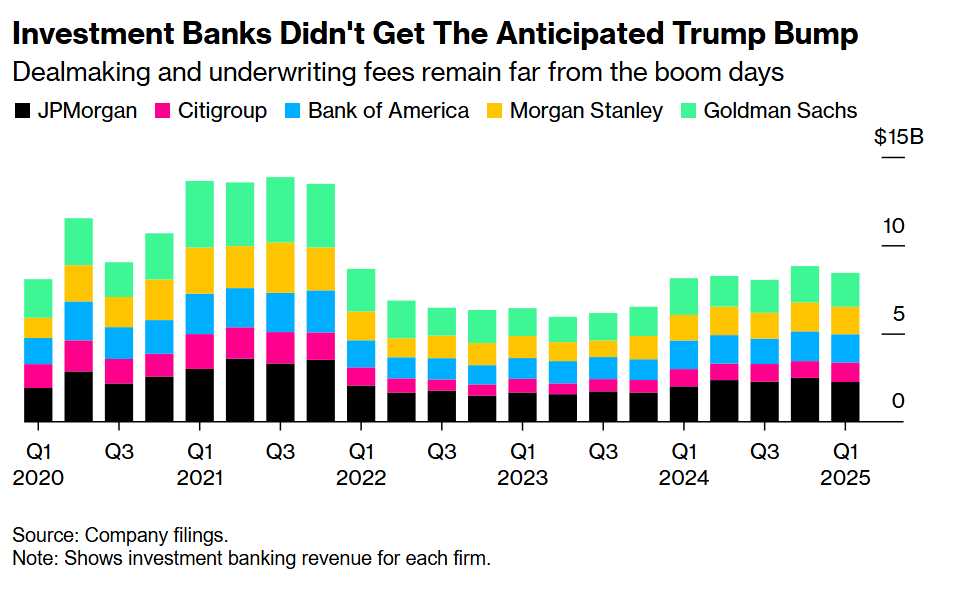
Goldman Sachs Chief Executive Officer David Solomon says he believes activity in mergers and public listings will “settle down” despite uncertainty that’s led to a slowdown across investment banks. “People need to transact, need to raise capital, need liquidity for their investments. Part of this is just a reset of expectations,” Solomon said in an interview with Bloomberg Television. Solomon cautioned that the current level of policy certainty was unhealthy for public and private markets, in which his company has growing stakes. He also warned that firings are likely to rise as corporate executives make expense management a key priority for the year.