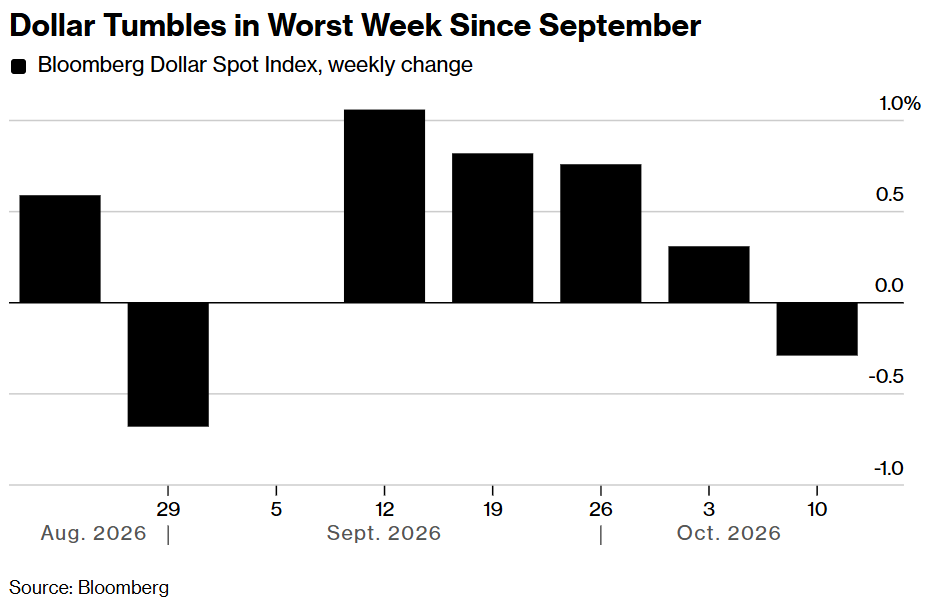
The dollar’s monthlong rally ran out of steam this week after remarks from Federal Reserve Chairman Kevin Warsh failed to give the currency a lift.
The Bloomberg Dollar Spot Index fell 0.2% on Friday, bringing its weekly decline to the largest since Sept. 4. The greenback weakened against all of its major peers, with the euro advancing and snapping a five-week run of losses.
Investors pared bets on an interest-rate hike later this month after Warsh did not comment on monetary policy or the US economy at the International Monetary Fund’s annual meetings Friday morning in Bangkok. It was the last chance for Warsh to hint at his policy view before the Fed enters a so-called blackout period Saturday prior to its October policy meeting.
“Warsh offered no guidance, which while it should be expected of him at this point, the market is taking it as a signal that the October Fed meeting is likely a no go,” said Noah Buffam, strategist at CIBC Capital Markets.
Earlier this week, the dollar got a boost from hotter-than-expected US consumer inflation data that fueled bets that the Fed would hike rates. Warsh had sent a hawkish message to markets prior to the Fed’s move in September to raise rates for the first time in three years.
The Fed’s shifting signals are creating uncertainty over the path of rates, according to Brent Donnelly, president of Spectra Markets.
Now, “they are wheeling out doves like mad, and October is priced out despite rip-roaring monthly data this week,” wrote Donnelly in a note, referring to reports showing persistent inflation and retail sales beating forecasts. Traders’ expectations for a rate hike at this month’s policy meeting have fallen to 20% from 30%.
Meanwhile, speculative traders, including asset managers and non-commercial players, have added to their bullish stance on the dollar, holding more than $44.5 billion in wagers tied to the dollar rising, Commodity Futures Trading Commission data through Oct. 13 showed. They are the most upbeat on the greenback since the end of July.
Still, the dollar is facing pressure from “building risks around the AI trade which has supported US growth in recent years,” said Buffam. Investors on Friday questioned the outlook for the artificial-intelligence trade as a selloff in chipmakers sent stocks lower.
The dollar “won’t be a haven if AI cracks,” Citigroup Inc. macro strategists including Adam Pickett wrote in a note, adding that they prefer the yen and Swiss franc as safe havens.
Written by: Melos Ambaye @Bloomberg
The post “Dollar Has Worst Week in Month With Warsh Quiet on Rate Path” first appeared on Bloomberg