If you haven’t seen the movie “The Revenant” with Leonardo DiCaprio, it is a 2015 American survival drama describing frontiersman Hugh Glass’s experiences in 1823. Hugh, an expert hunter and tracker is mauled by a grizzly bear in the film. (Warning: the scene is very graphic)
In the scene, the attack comes in three distinct waves.
Interestingly, this is also how “bear market phases” work.
Bob Farrell, a legendary investor, is famous for his 10-Investment Rules to follow.
Rule #8 states:
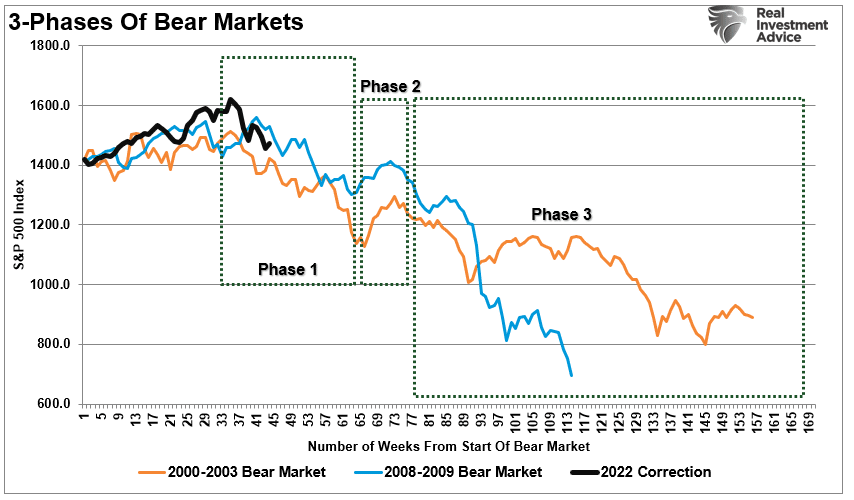
Bear markets have three phases – sharp down, reflexive rebound and a drawn-out fundamental downtrend
Dow Theory also suggests that bear market phases consist of three down legs with reflexive rebounds in between.
The chart above shows the last two primary cyclical bear market phases versus today (I adjusted the 2022 scale to match.)
As would be expected, the “Phase 1” selloff was not pleasant.
That selloff sets up a “reflexive bounce.”
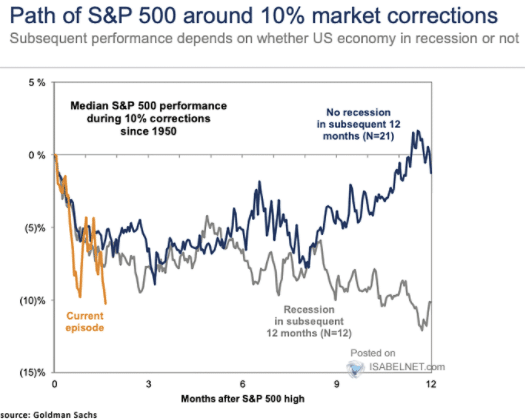
On Wednesday, I discussed the chart below in a Fox Business interview with Charles Payne.
The question is simple. What is the difference between a 10% decline in a bull market versus one that leads to a bear market?
As shown, it all depends on whether you are entering into a recession or not.
The risk of a “bear market” is rising. Inflation was surging before the surge in oil prices. Now those higher prices are impacting consumption as liquidity support is reversing. The massive infusions of fiscal liquidity in 2020 and 2021 are gone. The Fed’s QE program ended on Wednesday, which is extracting more liquidity from the markets. And next week, the Fed will hike interest rates, further tightening monetary policy.